Frequently Asked Questions
What are conversion practices?
Conversion practices are conduct that aims to change, suppress or eradicate the sexual orientation or gender identity of another person. They often take the form of a pseudoscientific or pseudo medical practice.
These practices are based on the belief that change is possible and desirable. Both the practices and the beliefs behind them are firmly rejected by medical and scientific evidence.
Why are conversion practices harmful?
The Tasmanian Law Reform Institute found that the harms caused by conversion practices in Tasmania include “isolation from, and loss of trust in, religious leaders or medical professionals, low self-esteem, self-hatred, anxiety, depression, trauma, substance abuse, a reluctance to seek medical treatment, and suicidal ideation, suicide attempts, and suicides.” It also found that “These harms often last for many years and trauma can persist for life for survivors.”
What isn’t a conversion practice?
Health services done in good faith that comply with legal, professional and ethical requirements are not conversion practices. Nor is helping a person to explore their identity. Expressing a personal view about gender identity or sexual orientation isn’t a conversion practice, even if you express an opinion that your view should be followed or applied.
Discussing religious teachings, or the requirements of religions, or requirements for membership or leadership in not a conversion practice. Nor is it a conversion practice for a parent to discuss sexual orientation, gender identity, sexual activity or religion with their children. Nor is participation in a public debate.
Do conversion practices still happen?
The Tasmanian Law Reform Institute found that conversion practices still happen in Tasmania. 46 submissions to the Institute reported people being offered, or undergoing, conversion practices, and other submissions implied or directly stated that they conduct conversion practices in Tasmania.
Why has this bill been developed?
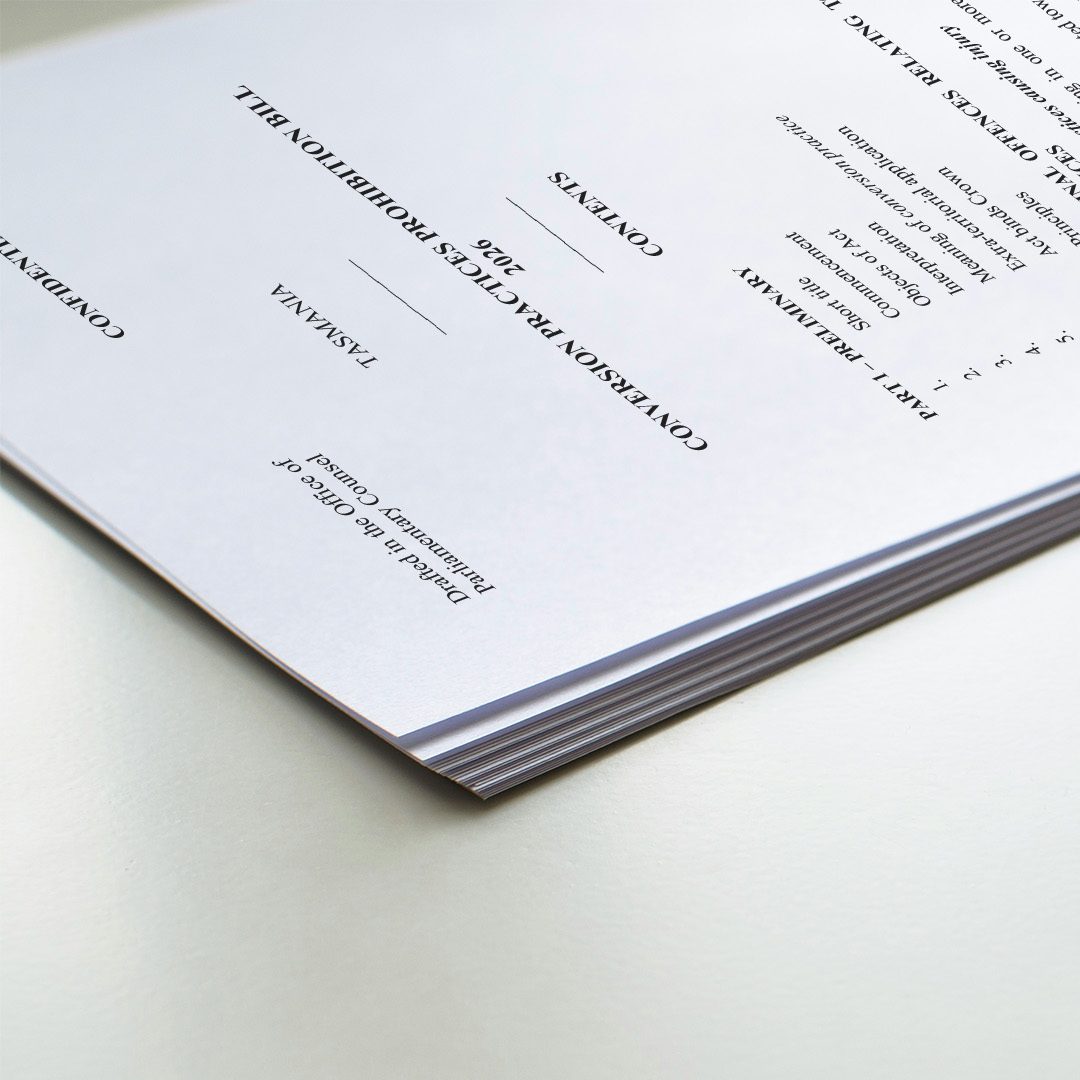
In April 2022, the Tasmanian Law Reform Institute (TLRI) published their final report on conversion practices, making a series of recommendations for law reform.
In December 2023, the Government published a consultation draft bill in response to this report. This bill was criticised for failing to address the matters raised by the TLRI, and for its negative unintended consequences. The draft bill was not progressed.
In March 2024, the Greens committed to introducing our own bill to ban conversion practices.
Does anywhere else ban conversion practices?
Victoria, the ACT, New South Wales, South Australia, Queensland all have some form of a ban on conversion practices. Many countries around the world have some form of prohibition on conversion practices, including Belgium, Canada, Cyprus, Ecuador, France, Germany, Greece, Iceland, Malta, Mexico, New Zealand, Norway, Portugal, and Spain.
How will this bill prevent conversion practices?
The bill provides criminal offences for engaging in conversion practices that cause injury and taking a person outside Tasmania for conversion practices, as well as lesser offences for advertising conversion practices.
It also establishes an Education, Prevention and Response Scheme (EPRS). This allows for conversion practices that don’t meet a criminal threshold to be reported, investigated, and addressed by the Conversion Practices Commissioner.
Will the bill effect freedom of speech, freedom of religion or parental rights?
No.
The bill outlines that expressing a personal view about gender identity or sexual orientation isn’t a conversion practice, even if you express an opinion that your view should be followed or applied.
It also makes clear that discussing religious teachings, or the requirements of religions, or requirements for membership or leadership is not a conversion practice. Nor is it a conversion practice for a parent to discuss sexual orientation, gender identity, sexual activity or religion with their children.
So long as conduct isn’t to change, suppress or eradicate the sexual orientation or gender identity of another person, it is not a conversion practice. People would remain free to hold and share their beliefs.